
What Makes a Curved Desk Different from a Standard Office Desk?
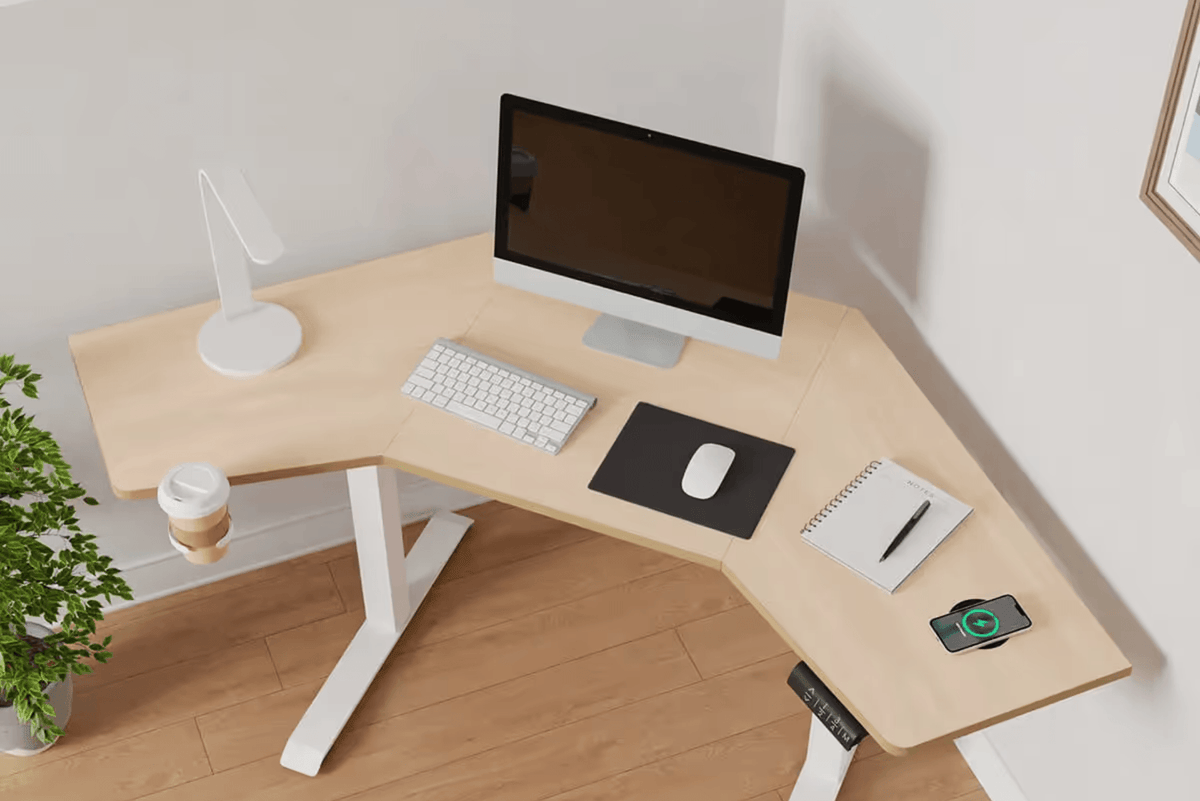
A curved desk is designed with - you guessed it - a subtle or dramatic curve, allowing you to sit right at the heart of your workspace. Unlike traditional rectangular office desks, this design keeps everything within easy reach while adding a little flair to your home office.
The best part? The curve maximises your surface area without stealing your entire floor space - a win-win for anyone working from home in a tight spot.
For those after something with tech-savvy features and even smarter storage, Koble’s Gino Corner Smart Desk is well worth a look - blending modern design with built-in charging. Fancy.
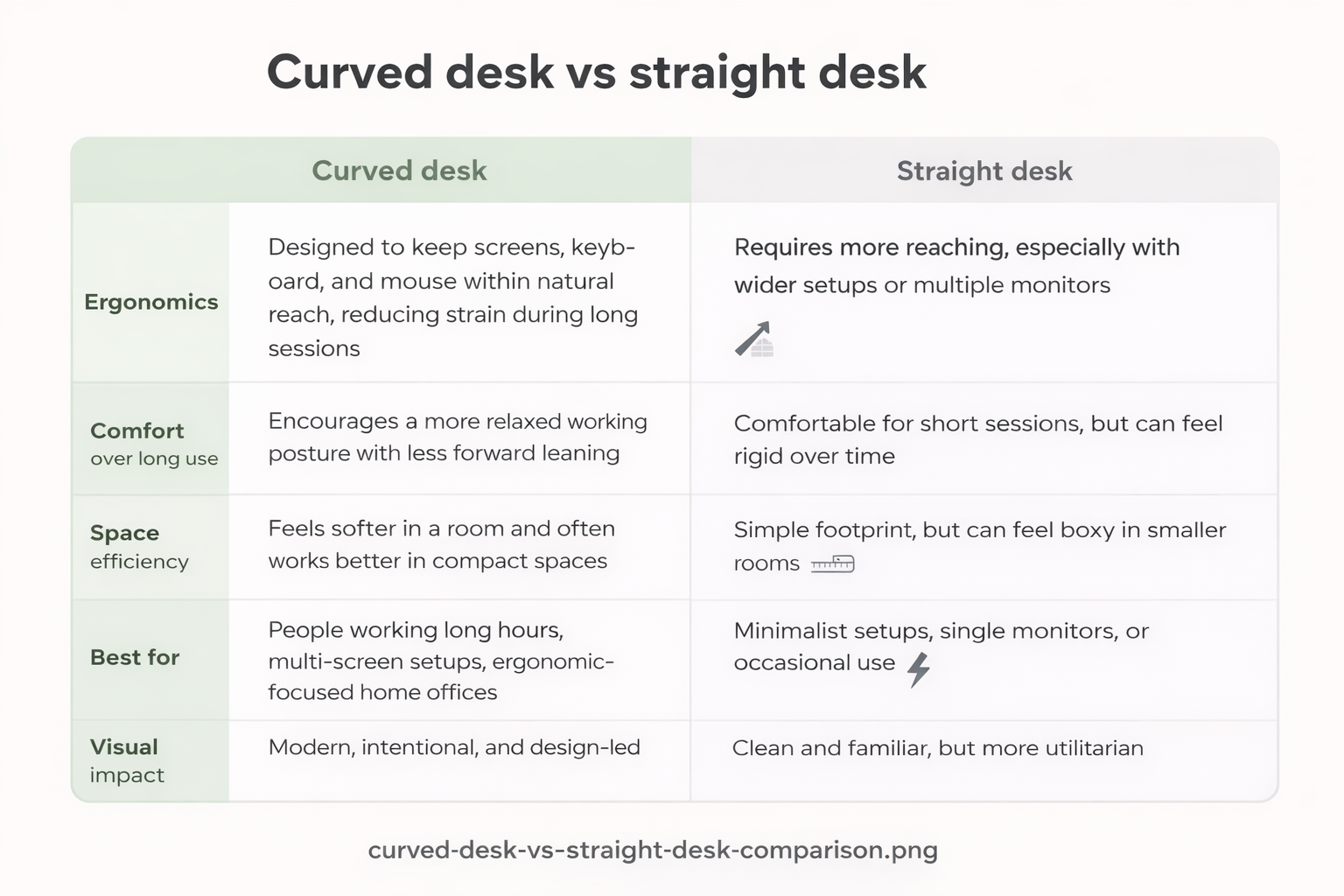
Curved desk vs straight desk
A curved desk is designed to improve comfort and reach, keeping screens and accessories within a natural working arc. Straight desks offer a simpler, more traditional layout but can require more reaching with wider setups. For users working long hours or using multiple screens, a curved desk often provides a more ergonomic experience.
Why a Curved Desk is Perfect for Your Home Office
Let’s face it - home offices can be tricky. You need enough space to work comfortably, but you don’t want a desk that dominates the room. This is where a curved desk shines.
It fits like a glove - Curved edges soften the space and slot nicely into awkward corners or open-plan areas.
Feels made for you - The shape naturally positions you at the centre, making multitasking less of a faff.
Pairs perfectly with filing cabinets and storage - Making it ideal for keeping the chaos under control.
Not sure how much storage you really need? Our take on a corner desk with storage might help you work that out.
Maximise Floor Space Without Sacrificing Style
One of the biggest perks of choosing a curved desk is how it opens up your floor space. Instead of sprawling across the room, curved designs tend to hug walls or tuck into corners — offering the space you need without the bulk.
For those battling for every inch of space (aren’t we all?), it’s a practical option that doesn’t scream “office” the minute you walk into the room.
The right desk offers that perfect blend of workspace and style — which is exactly why curved designs are popping up in home offices everywhere.
%20(22).png)
%20(23).png)
Is a Curved Desk the Same as a Corner Desk?
Good question - and the answer is… sometimes. Some corner computer desks are also curved, designed to make the most of tricky room layouts.
If you’re weighing up the difference, this L-Shaped Desk guide breaks down why certain shapes (like L-shaped or corner styles) might be better suited for you — especially if you’re working with dual screens or need extra storage.
Curved desks, however, bring a little extra elegance into the mix - ideal for people who want practicality with a side of “ooh, that looks nice”.
What to look for when choosing a curved desk
Space requirements
Curved desks tend to feel more compact than they look, but they still need breathing room. Measure the full width and depth, then allow space for chair movement and monitor arms. Curved designs work especially well in smaller rooms because the shape softens the footprint and improves flow rather than blocking it.
Ergonomics
The main advantage of a curved desk is how naturally it supports your posture. The gentle inward curve keeps screens, keyboard, and mouse within a comfortable reach zone, reducing shoulder and wrist strain during long work sessions. If you spend hours at your desk, this design detail makes a noticeable difference.
Adjustability
If you’re considering a curved standing desk, smooth and reliable height adjustment is non-negotiable. Look for a frame that moves evenly and holds its position without wobble. Memory presets are a bonus, especially if you switch between sitting and standing multiple times a day.
Cable management
Curved desks often support cleaner setups, but only if cable routing is built in. Check for rear cut-outs, trays, or under-desk channels that keep wires hidden and out of sight. A tidy desk isn’t just about aesthetics. It also makes daily use far less annoying.
Stability at standing height
Not all curved desks handle standing positions equally well. The key is a solid frame and even weight distribution, particularly if you’re running multiple monitors. A stable desk at full height means no screen shake, no keyboard bounce, and no subtle rage by lunchtime.
Curved Desk Storage Options - Because We All Have Too Much Stuff
Let’s not pretend we’re minimalists - between paperwork, gadgets, and the odd cup of tea (or three), clutter builds up fast. That’s why it pays to pick a curved desk with a bit of storage built-in or room for filing cabinets underneath.
Whether you’re after hidden drawers or just enough space to keep the mess out of sight during Zoom calls, curved designs tend to give you more flexibility.
Work From Home? You’ll Thank Yourself for Choosing a Curved Desk
There’s a reason more people are swapping to curved and shaped desks - it simply makes working from home feel less like… well, work.
That slight curve does more than just look good:
- It makes typing, writing, and even video calls easier on your posture.
- Keeps everything — from coffee to keyboards — within arm’s reach.
- Adds a touch of sophistication to your space without being try-hard.
And hey, if you’re still considering your options, don’t miss this corner desk with storage breakdown for more smart workspace ideas.
Pairing Your Curved Desk with the Right Setup
No desk is an island (unless you like sitting in the middle of the room, no judgement). To really get the most out of your curved desk, think about:
- A supportive chair — You’ll spend enough hours in it.
- Adjustable lighting — Keep those late nights comfortable.
- Smart storage — Filing cabinets or shelves to keep your space looking sharp.
And if you’re curious how curved or corner desks compare to the rest, Koble’s comparison pieces are a good read. You can start with their L-shaped desk guide — it’s not all curves, but it’s packed with solid advice.